
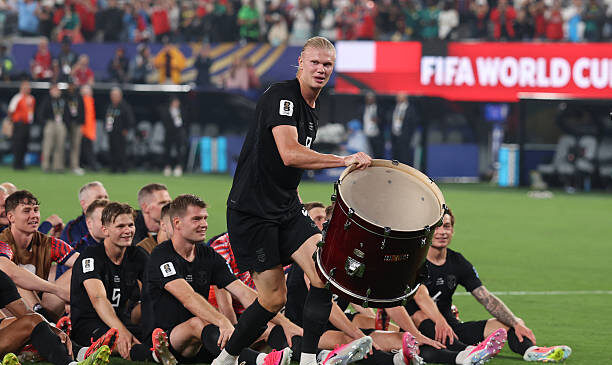
Viking Row Meaning: The Story Behind Norway’s Viral Football Celebration
When Norway returned to the FIFA World Cup in 2026 after a long absence, football fans expected to see world-class performances from stars like Erling Haaland and Martin Ødegaard. What few expected, however, was that one of the tournament’s biggest talking points would come from the stands rather than the pitch.
Thousands of Norwegian supporters were seen sitting shoulder to shoulder, moving their arms in perfect rhythm as if rowing an ancient Viking longship. The synchronized display, accompanied by chants of “Ro!”—the Norwegian word for “row”—quickly spread across television broadcasts and social media. Before long, people around the world were searching for one question:
What is the Viking Row meaning?
The answer goes beyond football. Viking Row is a celebration of unity, national identity, and modern supporter culture. Although inspired by Norway’s Viking heritage, it is not an ancient tradition. Instead, it is a contemporary fan ritual that has become one of the defining images of the 2026 FIFA World Cup.
In this guide, we’ll explore Viking Row meaning, who created it, why Norway fans perform it, and how it became a worldwide phenomenon.
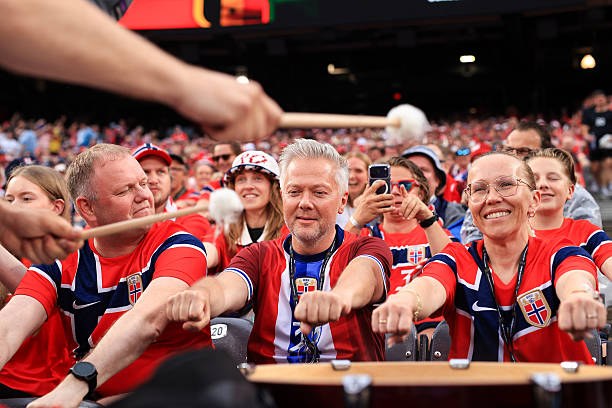
Norwegian supporters perform the synchronized Viking Row, a modern football tradition inspired by the country’s Viking heritage.
(Photo by Simon Stacpoole/Offside/Offside via Getty Images)
What Is Viking Row?
Viking Row is a synchronized supporter celebration performed by fans of the Norwegian national football team. Participants sit or crouch together and mimic the action of rowing a Viking longship while chanting in unison.
The celebration is designed to resemble a crew of Vikings rowing toward their destination. When thousands of supporters perform it simultaneously, the visual effect is dramatic and instantly recognizable.
Unlike many football celebrations that focus on loud chants or waving flags, Viking Row combines movement, rhythm, and teamwork. Every supporter becomes part of the performance, reinforcing the sense that victory is achieved collectively rather than individually.
Its simplicity is one of the reasons it has become so popular. Anyone can join in, regardless of age or football experience.
Viking Row Meaning Explained
At its core, the Viking Row meaning is about togetherness.
A Viking longship could only move efficiently when every rower worked in harmony. That same idea has been transformed into a football celebration where thousands of supporters symbolically “row” in the same direction, representing unity, determination, and shared purpose.
For Norwegian fans, the rowing motion also reflects pride in their country’s maritime history. Norway’s dramatic coastline and seafaring traditions have shaped its identity for centuries, and the Viking longship remains one of its most recognizable historical symbols.
The celebration is not about glorifying warfare or conquest. Instead, it celebrates cooperation, resilience, and community—qualities that resonate just as strongly in football as they do in history.
Why Is It Called Viking Row?
The name “Viking Row” comes from the famous longships used by the Vikings between the eighth and eleventh centuries.
These vessels enabled Scandinavian explorers to travel vast distances across Europe and beyond. Longships relied on crews working together, with rowers moving in rhythm to maintain speed and control.
Modern Norwegian supporters borrowed this imagery to create a celebration that feels distinctly Norwegian. Rather than copying an existing football chant from another country, they developed a tradition rooted in their own cultural heritage.
The rowing motion serves as a powerful visual metaphor. Just as Viking crews relied on teamwork to reach their destination, football supporters and players work together in pursuit of success.
Who Created Viking Row?
Although Viking Row looks timeless, it is actually a modern creation.
The football version of the celebration was conceived in late 2025 by Norwegian supporter Ole Frøystad, who soon became known among fans as “Mr. Row Row.”
Frøystad proposed the idea to Oljeberget, the official supporters’ club of Norway’s national football team. His goal was to create a supporter tradition that reflected Norwegian identity while encouraging everyone in the stadium to participate together.
Instead of unveiling the celebration during a major tournament, Oljeberget first tested it during Norway’s international friendlies against Switzerland and Sweden in early 2026. The response from supporters was overwhelmingly positive, and the synchronized rowing quickly became a regular feature of match days.
By the time the FIFA World Cup began, Viking Row had already established itself as Norway’s signature supporter tradition.
How the 2026 FIFA World Cup Made Viking Row Famous
Norway’s return to the World Cup provided the perfect stage for Viking Row.
As millions watched the tournament, television cameras repeatedly focused on Norwegian supporters performing the synchronized celebration. Videos of entire sections of stadiums rowing together spread rapidly across TikTok, Instagram, X, and YouTube.
The combination of Norway’s exciting performances and the unique visual spectacle made Viking Row one of the tournament’s defining moments.
International broadcasters highlighted the celebration, while football fans around the world began asking about its meaning and origin. Within days, “Viking Row” became one of the most searched football-related topics online.
The celebration’s popularity was further boosted by the performances of stars such as Erling Haaland and Martin Ødegaard, whose leadership helped keep Norway in the global spotlight throughout the tournament.
Is Viking Row an Ancient Viking Tradition?
Despite its historical appearance, the answer is no.
One of the biggest misconceptions surrounding Viking Row is that it dates back to the Viking Age. Historians agree that there is no evidence of a crowd ritual identical to the modern football celebration.
Instead, Viking Row is best understood as a modern tradition inspired by Viking imagery and Norway’s maritime heritage.
This distinction is important because it highlights the creativity of today’s supporters. Rather than attempting to recreate history, they have developed a new football ritual that celebrates the past while remaining firmly rooted in contemporary fan culture.
Even the rowing movement itself is symbolic. Real Viking crews rowed using practical techniques designed for speed, endurance, and navigation—not synchronized entertainment.
That said, the symbolism is powerful. Viking Row captures the spirit of teamwork and determination associated with Viking voyages, making it a fitting tribute to one of Norway’s most famous historical eras.
The Connection to Amon Amarth’s “Rowing Pit”
An interesting aspect of Viking Row is its resemblance to a long-standing tradition in the heavy metal community.
Fans of the Swedish Viking metal band Amon Amarth have, for many years, performed what is known as the “rowing pit.” During certain songs, concertgoers sit on the floor facing one another and imitate rowing together in rhythm with the music.
Although the football version of Viking Row was independently created by Norwegian supporters, many fans quickly noticed the visual similarity between the two traditions.
The comparison has sparked interesting discussions online, but the purposes are different. The concert tradition is part of live music culture, while Viking Row was specifically developed to unite football supporters behind Norway’s national team.
People Also Read:





 Because entertainment never stops! CelebsAdda brings you fast, reliable, and spicy updates from the world of cinema, television, and celebrity culture anytime, anywhere.
One Response